
The Italian Project
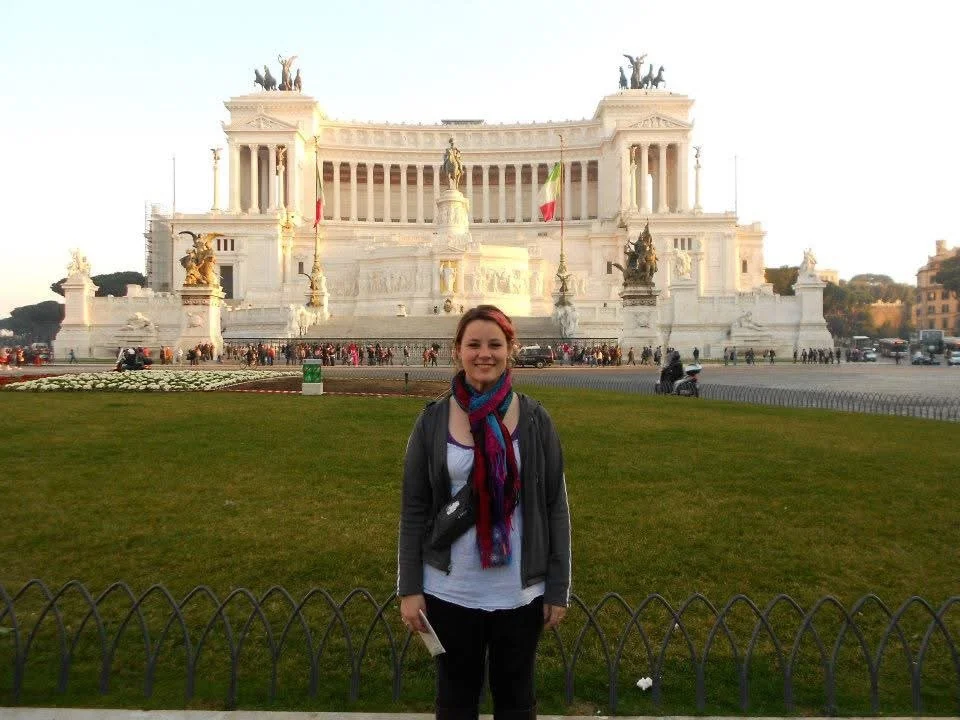


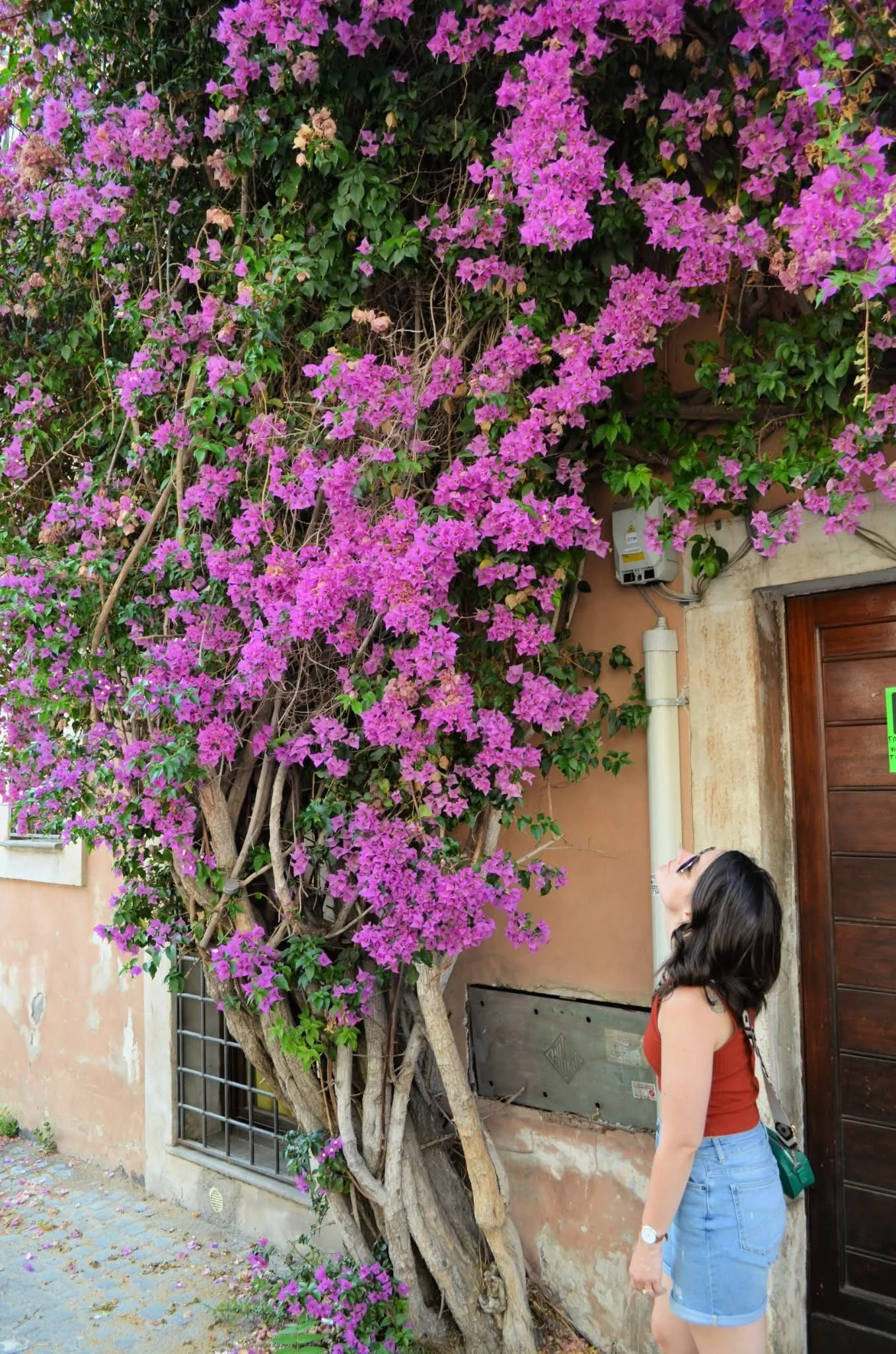
Photos: Me in Italy over the years.
Ciao, y'all! Remember how I went to the Winter Olympics in Milan earlier this year (I promise I will stop talking about it soon)? We had a great time at the world's most international event, but the trip left me feeling equal parts nostalgic and incompetent.
I studied Italian years ago and really enjoyed the language and the connection to my heritage. I even made it to a B1, a lower-intermediate level of fluency, and traveled to Italy quite a bit back in the day. It was a happy time in my life. Sadly, those days have long since passed and my Italian proved embarrassingly rusty on our recent trip to Milan.
So...what's a linguist to do? Embark on a language journey, of course! 2026 at AC Linguist HQ will be the year of Italian, with the goal of building a stable long-term relationship and making Italian a working language by the end of 2027. I've assembled a 4-phase plan that draws on research in second language acquisition and on my own experience as a long-term language learner. I plan to do a more in-depth post on the background for each phase, but for now, here's a general overview:
Phase 1: The Sponge Phase
We are here! In Phase 1, we're focusing on:
· Comprehensible, authentic input. This means media aimed at Italian kids and language learners. Books, movies, TV, podcasts, music, content creators that are appropriate for my current level or slightly above. The goal is to fill my reserves of real Italian language so that when it's time for me to produce, I can draw from those reserves instead of translating from English.
· Sustainable grammar structure. This is more of a refresher for me, since I already learned about Italian grammar structure years ago. Daily language app lessons are all I need for now. Not the owl one, though. You know the one.
· Small, regular contact. The key is low-key. Language app and reading every morning during coffee. An episode of Love is Blind Italy after work while I crochet. I'm trying to build Italian into things I already do (hello, habit stacking) and make it normal.
· Low affective barrier. Again, the key is low-key. The affective barrier is the mental block that comes up when you're anxious and keeps you from accessing your second language. I'm not going to risk hampering my progress by triggering the affective barrier in this stage, so I'm not putting any pressure whatsoever on language production until I feel ready.
· NOTICING. The most important thing a language learner can do. Learning vocabulary and grammar equivalents is not enough. Languages address subjects in different ways. I've trained myself for years to notice these differences and implement them in my L2 personalities. Italian is a whole new world of perception for me to explore.
Phase 2: Squeezing the Sponge
There will come a time when I feel ready to start producing language naturally. I know because this happened to me with Catalan—after a few years of listening and filling my reserves with input, the words suddenly came out. It surprised even me; I was just sitting at the dinner table with my in-laws and suddenly felt compelled to participate in the conversation. Now we forget that there was ever a time when I didn't speak Catalan. To level up in Italian, the plan is:
· Low-stakes production. I'll start with doing my morning journaling in Italian rather than English. Then I'll find an Italian conversation partner with an open, friendly vibe and similar interests, like the Catalan convo partner I've been meeting with for years. The key is to form a real connection with emotional investment so that Italian becomes an important part of my life and speech flows naturally. No anxiety here! Plus, the cultural insight that a target-language friend offers is invaluable.
· Higher-level input. Media aimed at teens/young adults. Always with Italian subtitles on!
· Continued grammatical structure. At this point, it will be more of a maintaining-progress thing than a learning-new-stuff thing; I want to stay connected to Italian every day even when things get busy.
· STILL noticing. In this phase, I can ask my convo partner about words and phrases that I notice are interesting and see what they say! The key here is to always be analyzing. Why did they say it that way? Does English handle this subject the same way? Would a direct translation sound natural? How would an actual Italian person put it?
Phase 3: Washing Dishes
Is it a pipe dream to study abroad as a 30-something married woman? We're going to find out. The idea is to do a summer language intensive in Italy in 2027 for as long as I can, because realistically I can only learn so much from home. Benefits:
· Wide range of linguistic contexts
· New social connections
· Chance to get comfortable using Italian in its natural habitat
The difficulty will be coming back from Italy and maintaining my progress. Thus, there is a Phase 3, Part 2:
· Keep up apps, convo partner, journaling.
· Higher-level input. For actual adults this time. Hopefully I'll get all the jokes by then.
· Higher-level output. Start writing blog posts and LI posts in Italian. Start practicing translation.
· Italian book club. Book clubs are my absolute top language-learning hack. They work all the language muscles: reading, speaking, listening, and writing (if you take notes!). You read with more of a purpose because you have to talk about the book, and you come across books you wouldn't necessarily have chosen yourself. You also make connections with other Italian speakers and your sense of belonging in the Italian community grows, which is so important. Using this hack with Catalan checked all those boxes and took me from B2 (intermediate) to C1 (advanced).
Phase 4: Getting Paid to Wash Dishes
In this phase, I will incorporate Italian as a working language in my translation business. I expect it to take a while to get to this point, perhaps not until 2028 is well underway. And that's okay! Slow and low-key is the name of the game. At the end of the day, I want a stable relationship with a language that is meaningful to me. I want to feel confident and capable when acting as a spokesperson for that language, so I will not rush to get to this point. The plan:
· Join an Italian to English translation revision group. I'm currently in one for Spanish and it's a great exercise for thinking critically and metalinguistically about our source and target languages.
· Advertise new language pair to the internet and to current clients. We'll probably need a new section on the website, updated LinkedIn profile, Instagram, the works.
Clean Dishes Every Day
Maintenance phase! The goal is a stable, long-term relationship. That means keeping up convo practice, feeding Italian friendships, book rotation, occasional trips to Italy, following TV shows, and translating for Italian clients. Just like I do with Catalan and Spanish now, I will make sure that Italian stays a relevant and normal part of my life, whatever that happens to look like in the future.