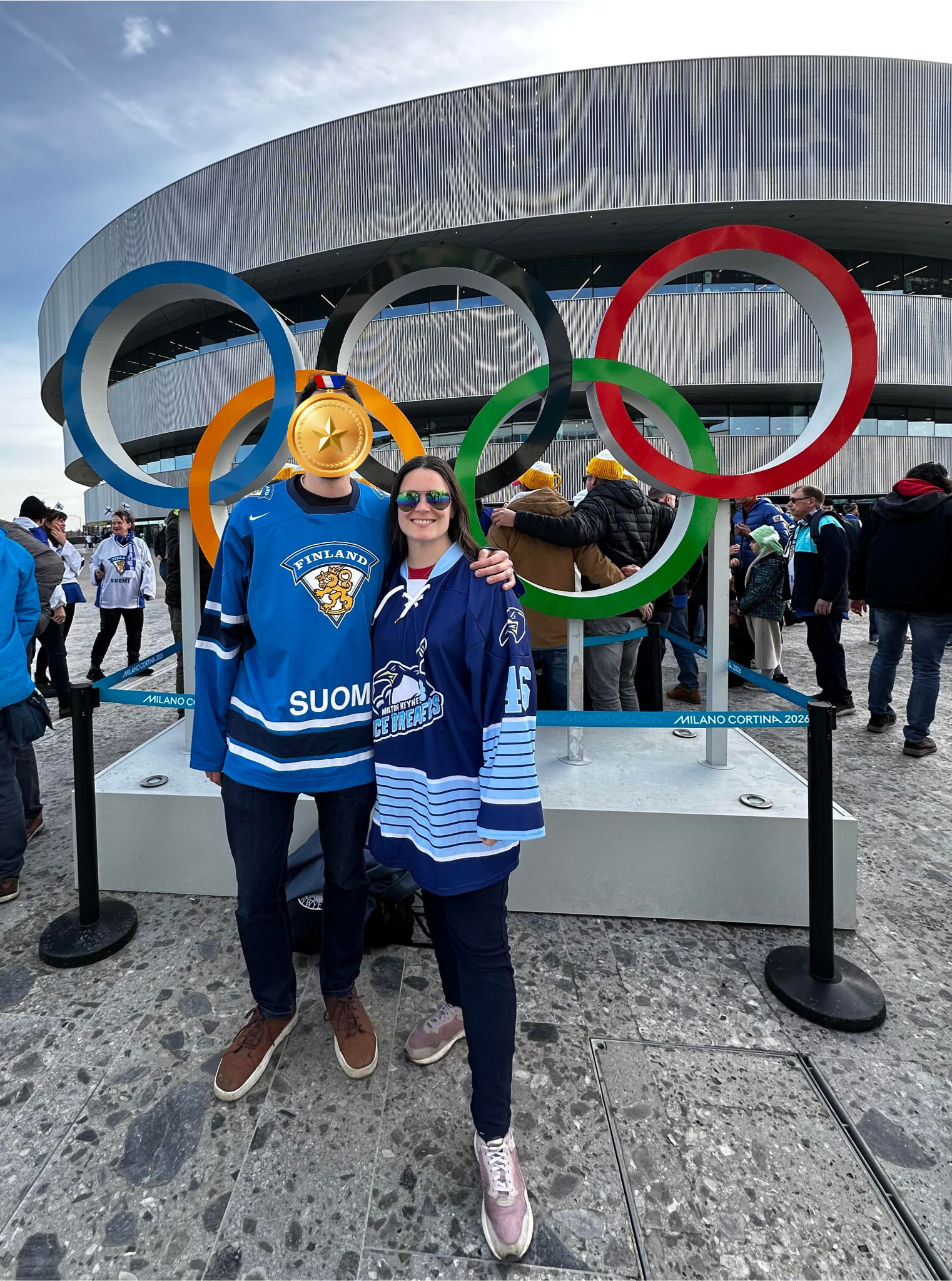
We went to the Olympics!
I’m not a sports person, a crowd person, a noise person, or a cold-weather person, but I am a supportive wife and a lifelong student of language and culture, and that is how I ended up at the 2026 Milano Cortina Olympic Winter Games.
My husband is a massive ice hockey fan, a dedicated follower of the NHL and the Boston Bruins and an ice hockey player himself. Tickets went on sale a year in advance and he was determined to make the most of this opportunity to see top NHL and PWHL players just a short flight away from where we live in the UK. I said, alright, I’ll go with you, but we’re seeing some figure skating too because it’s pretty.* And I mean…it’s Italy, how could I say no? The sociolinguistic potential behind such an international event was too good to pass up.
*In hindsight, this is hilarious because I spent our entire Olympic adventure dealing with a broken elbow and a busted hip from falling while ice skating. But I digress.
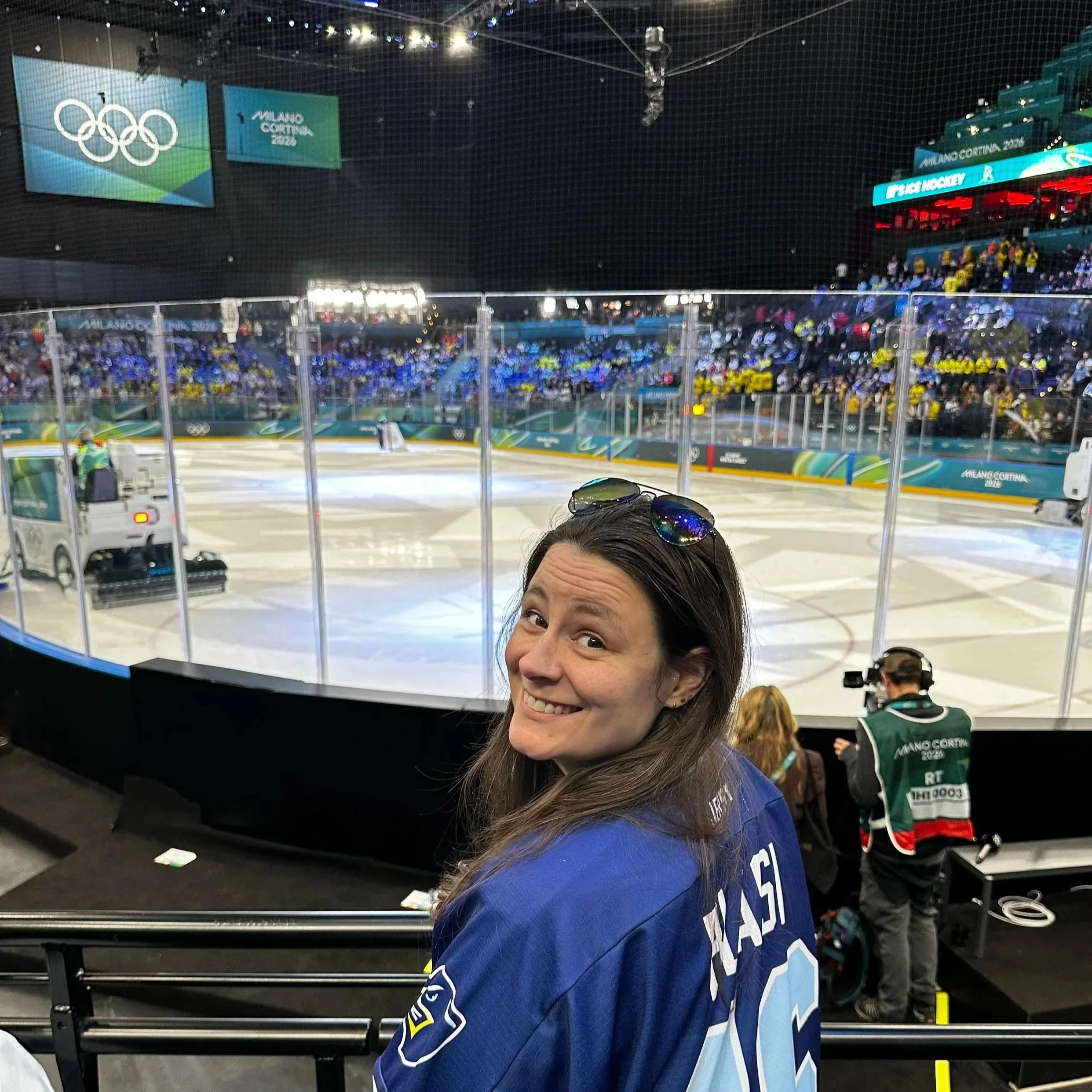
Finland vs. Sweden at Milano Santagiulia Ice Hockey Arena.
We saw three hockey games: two men’s prelims, Switzerland vs. France and Finland vs. Sweden; and the Canada vs. Germany women’s quarter final. It also turns out that one figure skating competition ticket cost more than all our hockey tickets combined, so we ended up finding much cheaper tickets to the training sessions where the skaters practiced their upcoming programs and IMO that was just as good.
In the run-up to our trip, I worked myself up a bit (don’t worry, all part of my process) and was afraid we’d be overrun by drunk people, we’d get lost, we’d miss a game, we’d be left starving and cold in the middle of nowhere with no way out, we’d have to pee behind a tree or something, all kinds of worst-case scenarios.
I’m happy to report that none of those fears came true. We attended events in 3 different venues around Milan and found them all on public transportation without a problem, had plenty of access to food, bathrooms, and cool photo spots, and the beer containers they sold were so small that people couldn’t get drunk on them at a fast enough pace to become rowdy.
We even had comfortable seats and doable temperatures, once we bundled up. It was a logistical win (I’ll leave out the fact that the new ice hockey arena was finished a week before the games started). And I even had fun! With my basic needs covered, I was able to enjoy the events we saw (and thank my lucky stars that my husband is a fan of hockey and not ski mountaineering).
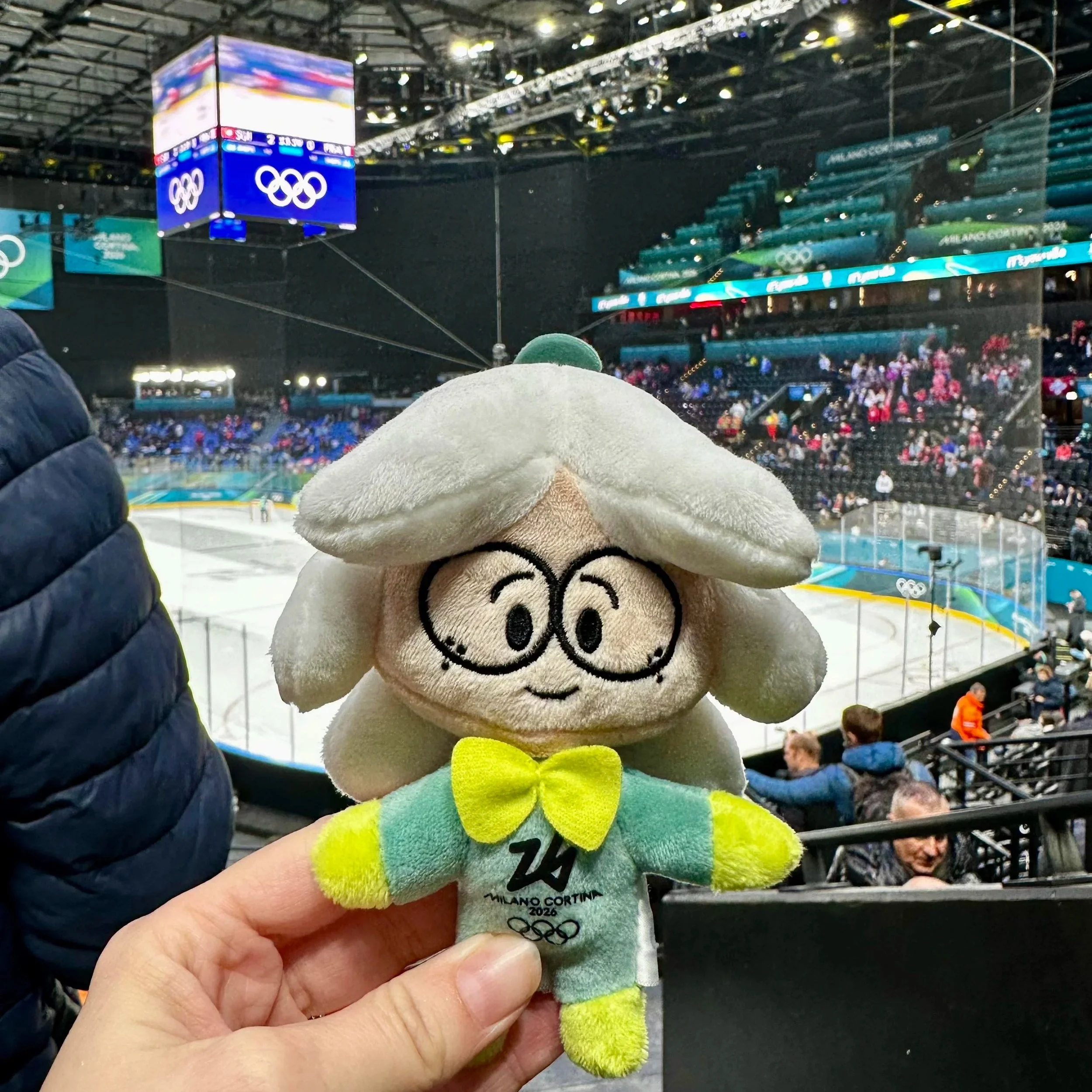
Flo, one of the official Milano Cortina 2026 mascots.
From a cultural and linguistic perspective, the games gave me a lot of food for thought. First, multilingual/multicultural countries competing as one entity—how do they handle linguistic and cultural differences while working toward a common goal under immense pressure?
Looking at countries like Switzerland, Canada, Belgium, Spain, the UK—all of them have a complex internal sociocultural situation going on, all handled very differently. Switzerland has four national languages but no single common language, and they don’t seem to mind.
French Canadians, Flemish Belgians, Catalan Spaniards, and Scottish Britons do not necessarily have the same outlook; there are long, arduous histories of contention in those countries that contribute to their citizens’ sense of national identity. How does this translate to playing sports under one national flag with people that identify differently? Do they simply put aside their differences for the chance to play their sport at the highest level?
And what about multilingual chirping? “Chirping” is a hockey-specific term for trash-talking the other team. For some excellent examples of fluently devastating chirping, watch a few clips from the Canadian hockey comedy series Shoresy. The goal is to weaken your opponent’s mental state by hitting them with personalized insults, ultimately affecting their game. This is a key element of hockey culture. It’s rude but expected. Does it have the same effect on the recipient if it’s given in a) a language that is not the recipient’s native language or b) a language that is not the giver’s language? Is it easier to be mean to somebody in a non-native language? Can you be as creative? Does it sound as pointed? Is it easier to ignore?
Research does show that it’s easier to make more logical/less emotional decisions in a second language; extrapolating pretty far, that could mean it’s easier to make the decision to insult the goalie’s mother if you think it will benefit your team. At the other end, research also shows that speech in the receiver’s native language is processed with more emotion.
Logically, this could mean that the goalie will feel more insulted if the insult about his mother is in his native language. However, the studies don’t mention the quality of the insults, so it isn’t clear exactly how much impact an insult would have if it’s made with linguistic errors. I imagine a bungled insult would be less painful but potentially funny, therefore equally distracting.
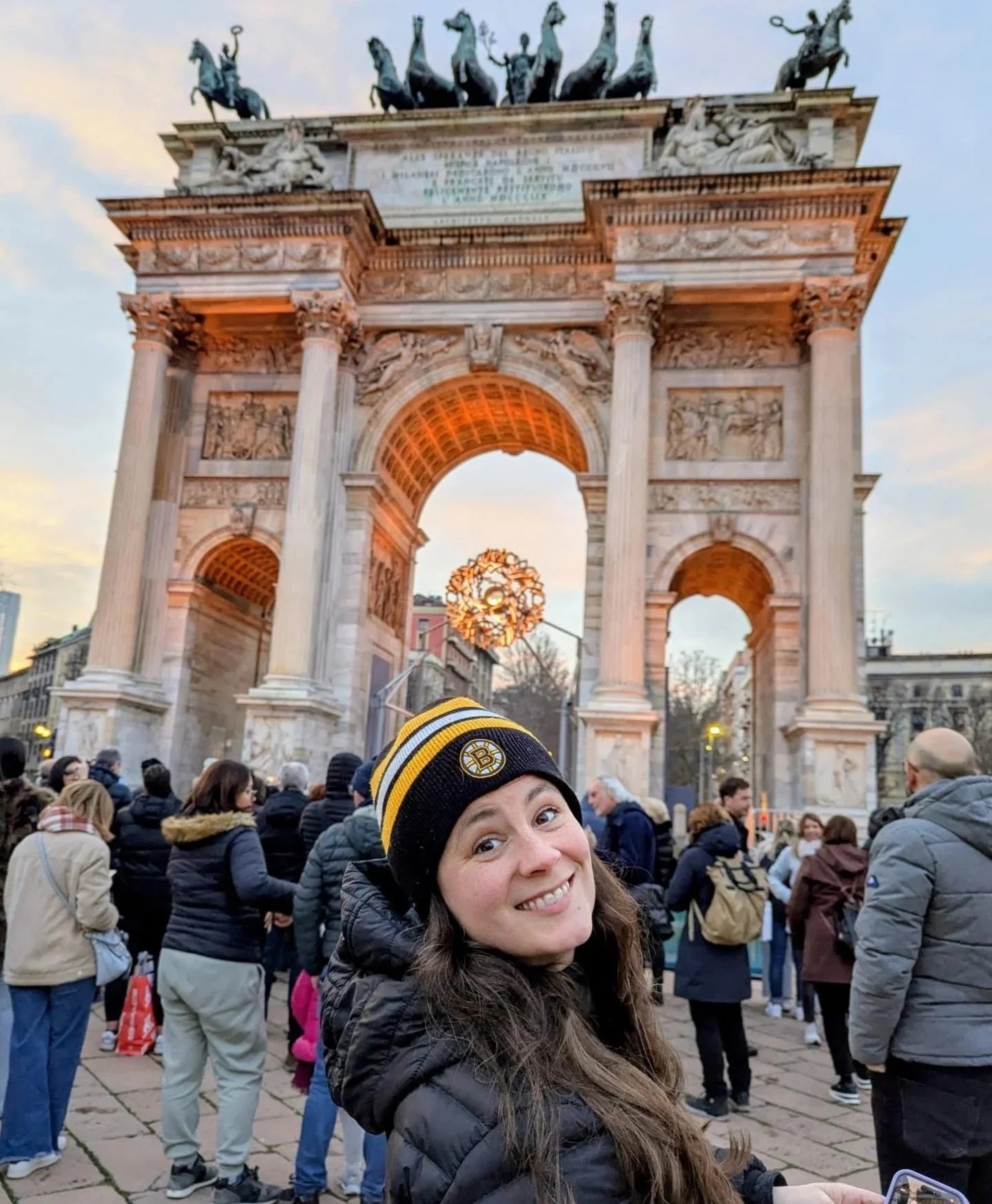
The Olympic Flame at l’Arco della Pace.
During the games, we saw players make plenty of booboos such as cross-checking, tripping, high-sticking, holding, hooking, roughing, slashing, and unsportsmanlike conduct, which are all against the rules and come with varying degrees of penalties. Luckily, I had an interpreter fluent in hockey who helped me understand what all these terms meant. When the referees called a penalty for one of these infractions, they typically did so in English and their sentence was interpreted into Italian for spectators from the host country.
Interestingly, though, the Italian hockey terminology was not consistent across games. “Period” was interpreted as “periodo” in one game, but “tempo” in another. I thought to myself, this is the kind of thing that can be done in advance—a glossary of relevant sport terminology for things that are bound to come up during the event. Italians do play hockey, even if less so than northern European countries; how is it that these terms were not standardized and distributed to the Italian interpreters/announcers in advance? Is this yet another example of language professionals being undervalued or was it a legitimate oversight?
This leads me to my biggest takeaway of the Milano Cortina Olympics as a language professional—it is time for me to resuscitate my Italian and make it a working language. I studied Italian alongside Spanish and Portuguese in college, eventually reaching a decent intermediate level. It’s always been important to me because of my Italian ancestry; I want to understand what, where, and who we came from. But my focus in the last 10 years or so has been strengthening my Catalan, which I am very proud of, but which means I have not done any maintenance on my Italian. It felt so nice to interact with Italian again at the Olympics, but awful to face the reality of my incompetence and switch back to English; that’s not my brand. 2026 will be the year of Italian here at AC Linguist HQ.
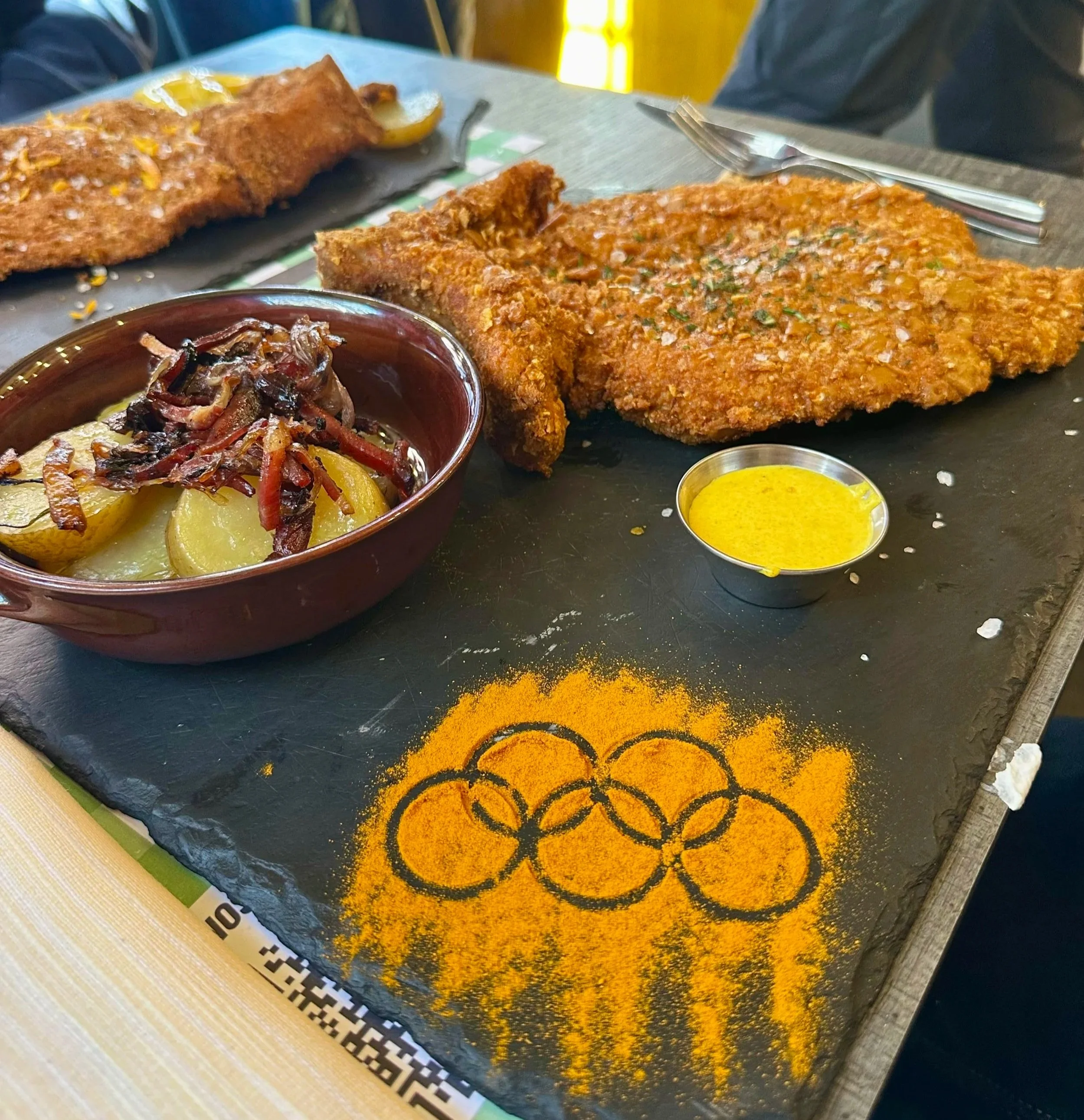
Cotoletta alla milanese. Not schnitzel. Not at all.
Finally, we got to see some truly touching moments of Olympic spirit on our trip, which brightened my worldview. We watched a series of figure skating training sessions where a group of individual skaters would come out and practice their programs for a set amount of time, then allow the next group to come on. We saw skaters from several different countries, including US gold medalist Alysa Liu, come out and perform, check their execution, talk with their coaches, and interact with each other. I really enjoyed peeking behind the curtain and seeing how these amazing athletes worked.
At the end of several sessions, the skaters, who were pitted against each other in competition, would come together and hug, play around, and cheer each other on. Their direct competitors! They were just as interested in each other’s success, and the success of the sport, as they were in their own. Unbelievable. It was a huge pivot from hockey culture, where the old adage goes, “I went to a fight and a hockey game broke out!”.
We saw other events on TV with similar interactions between athletes from different countries. Competitors in big air snowboarding and ski jumping were congratulating each other after their events like they’d been friends all their lives. It was heartwarming and made me think, maybe international cooperation isn’t so far-fetched after all.
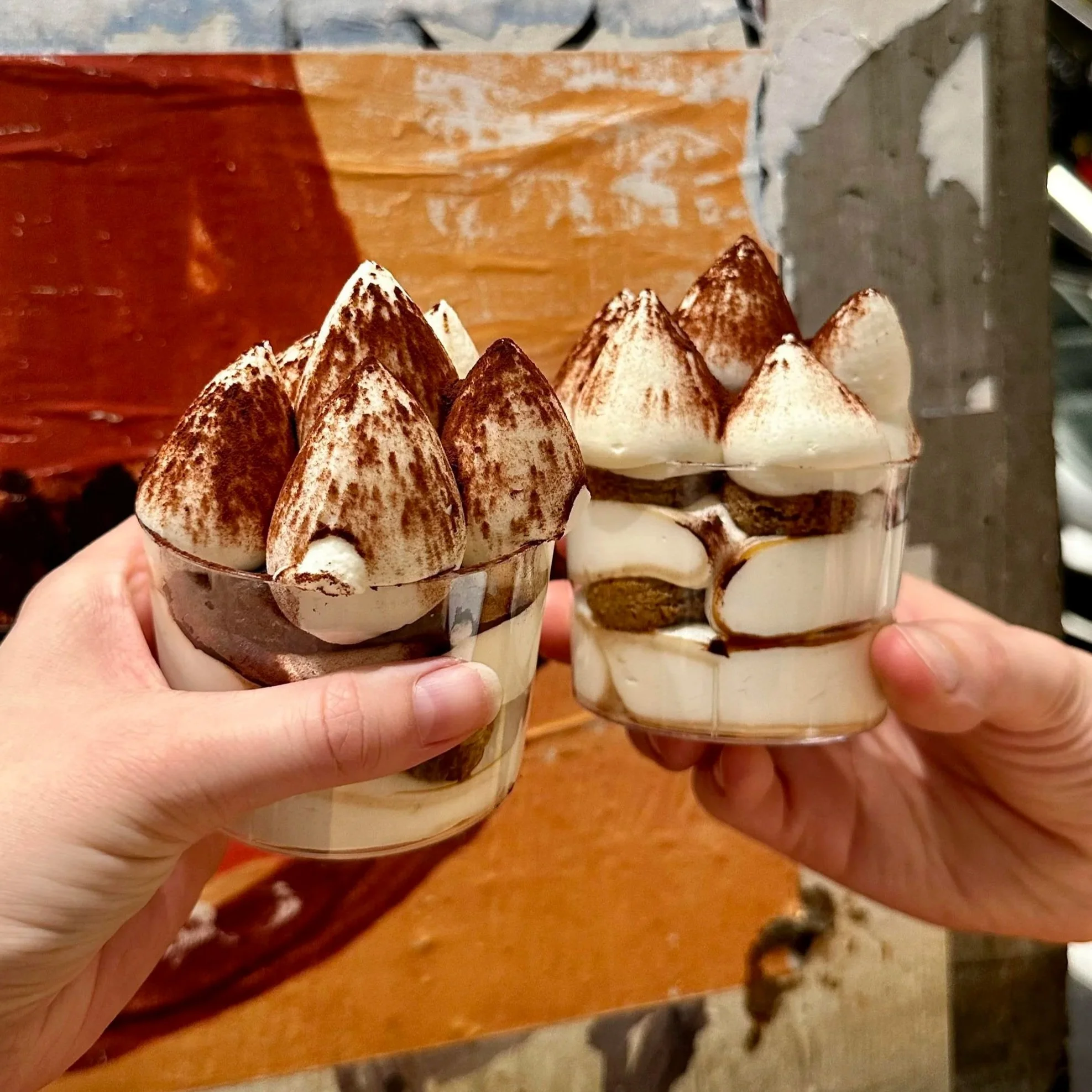
No trip to Italy is complete without tiramisù.
Throughout my reflection, I’ve come to realize that love of the sport is the driver behind much of what goes on at the Olympics. Athletes put up with a lot to compete at the highest level. This is not groundbreaking, but as a non-sports person, the concept is not innate to me. I’ve found it so interesting to see what happens when people come together for a single purpose.
The next Winter Olympics will be held in France in 2030. Would I do it again? Actually yes, and I probably will; lots of our friends and family were inspired by our trip and are looking into going themselves, and y’all know I got FOMO. I will not be learning French, though. That’s cross-checking a line.